What Credit Score Do I Need for an SBA Loan? The Real Requirements in 2026

Terrydale Capital
Jan 13, 2026 21 Min read

You're looking at buying commercial real estate or refinancing a property you own. Someone mentioned SBA loans. Lower down payments. Longer terms. Owner-occupied properties. Sounds good.
Then you wonder: what credit score do I need?
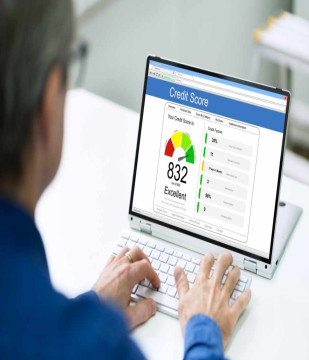
Here's the short answer: most SBA lenders want to see a personal credit score of at least 680. Some will work with you at 650. But if you want good rates and smooth approval, aim for 700 or higher.
Let me break down what actually matters and why credit scores aren't the whole story.
The SBA Doesn't Set a Minimum Score
The Small Business Administration doesn't publish an official minimum credit score requirement. They guarantee loans made by banks and other lenders, but they let those lenders set their own credit standards within broad guidelines.
That creates variation. One bank might approve you at 680. Another wants 720. A third won't touch anyone under 700.
But here's what we see in practice: 680 has become the informal floor for most SBA lenders in 2026. Below that, you'll struggle to find a lender willing to approve your loan. Above that, your options open up.
Think of 680 as the minimum to get in the door. It doesn't guarantee approval. It just means lenders will look at your application seriously instead of declining it immediately.
What Credit Score Actually Gets You Approved
Getting approved for an SBA loan requires more than hitting a minimum credit score. Lenders evaluate your entire credit profile.
A 680 score with clean credit history looks better than a 720 score with recent late payments. A 700 score with low debt looks better than a 740 score with maxed-out credit cards. The score is a summary. Lenders dig deeper.
They look at your payment history. Any late payments in the last 12 months raise flags. Late payments on business obligations raise bigger flags. A 30-day late payment two years ago probably won't kill your deal. A 60-day late payment six months ago might.
They look at your credit utilization. If you're using 80% of your available credit limits, that suggests cash flow problems. Even with a decent score. Keep your utilization under 30% if possible. Under 20% is better.
They look at derogatory marks. Collections. Charge-offs. Judgments. Liens. Bankruptcies. A bankruptcy discharged seven years ago might be acceptable. A tax lien from two years ago creates problems.
They look at inquiries. Too many recent credit applications suggest you're desperate for money. A few inquiries for shopping loans is normal. Ten inquiries in three months raises questions.
Let's look at two real examples. Borrower A has a 695 credit score, no late payments in three years, 15% credit utilization, and no derogatory marks. Borrower B has a 725 credit score, two 30-day late payments in the last year, 65% credit utilization, and a collection account from 18 months ago.
Which borrower gets approved? Probably Borrower A. The lower score doesn't matter as much as the clean credit profile.
SBA 7(a) Loans and Credit Requirements
The SBA 7(a) program is the most common SBA loan for commercial real estate. It allows you to purchase owner-occupied properties with as little as 10% down, though most lenders require 15% to 20%.
For SBA 7(a) loans, lenders typically want credit scores of 680 minimum, with 700 to 720 being more comfortable territory. The larger your loan request, the higher the credit standards tend to be.
A 1.5 million dollar loan request gets more scrutiny than a 400,000 dollar request. Lenders can absorb smaller losses more easily. Larger loans require stronger credit profiles to justify the risk.
SBA 7(a) loans also require all owners with 20% or more ownership to personally guarantee the loan. That means the lender evaluates every significant owner's credit. If you have a business partner who owns 30% and has a 620 credit score, that creates problems even if your score is 750.
A medical practice recently applied for an SBA 7(a) loan to purchase their office building. Three doctors owned the practice. Two had credit scores above 720. The third had a 665 score with a tax lien from three years ago. The lender declined the loan. They reapplied after the third doctor bought out that partner's share, dropping his ownership below 20%. The loan got approved.
Partnership structures matter for credit requirements. The more owners, the more credit profiles get evaluated. One weak link can sink the deal.
SBA 504 Loans and Credit Standards
SBA 504 loans work differently than 7(a) loans. They're specifically designed for purchasing commercial real estate and equipment. The structure typically involves three parts: 10% down payment from you, 50% loan from a bank, and 40% loan from a Certified Development Company backed by the SBA.
Credit requirements for SBA 504 loans are similar to 7(a) loans. Most lenders want 680 minimum, with 700 being more comfortable. But 504 loans tend to be more forgiving of marginal credit because the loan structure reduces risk for the bank.
The bank only funds 50% of the project. The CDC funds another 40%. That means the bank has less exposure than they would on a conventional loan. Less exposure sometimes translates to more flexibility on credit.
A manufacturing company in Ohio recently closed an SBA 504 loan with the owner's credit score at 685. He had filed bankruptcy six years prior but had rebuilt his credit steadily since then. The business had strong cash flow and was buying a building it had leased for five years. The bank approved the loan despite the bankruptcy history because the overall profile showed stability and the loan structure protected them.
Would that same borrower have gotten approved for a conventional loan? Probably not. The SBA guarantee and the 504 structure made the deal possible.
How Business Credit Affects Approval
Personal credit score matters most, but business credit plays a role too. If your business has been operating for several years and has established credit, lenders will review that as well.
Dun & Bradstreet, Experian Business, and Equifax Business track business credit. If your business has a strong payment history with suppliers and vendors, that helps your case. If your business has late payments or collections, that hurts.
Many small businesses don't have established business credit at all. That's not necessarily a problem. Lenders understand that newer businesses may not have built business credit files yet. They'll rely more heavily on personal credit in those cases.
But if your business does have business credit, make sure it's clean. A business with excellent personal credit but poor business credit creates questions about management and operations.
What If Your Credit Score Is Below 680
Let's say your credit score is 650. Or 620. Can you still get an SBA loan?
Maybe. But it's harder. Much harder.
You'll need compensating factors. Significant cash reserves. Strong business cash flow. Substantial collateral. Large down payment. Proven industry experience. Probably several of these.
Some SBA lenders specialize in working with borrowers who have credit challenges. They'll go down to 640 or even 600 in rare cases. But expect higher rates, more requirements, and longer approval timelines.
You might also consider waiting and improving your credit before applying. Six months of on-time payments can boost your score significantly. Paying down credit card balances helps. Disputing and removing errors from your credit report helps.
A contractor wanted to buy the building his company leased. His credit score was 645. He had three collections totaling $12,000 from a difficult period three years earlier. We advised him to pay off the collections, wait six months, and then apply. He followed that advice. His score improved to 695. He got approved.
Taking six months to improve your credit might delay your purchase. But it might also mean the difference between getting approved and getting declined. Or between getting approved at 9% and getting approved at 7.5%.
How to Improve Your Credit Before Applying
If you're planning to apply for an SBA loan in the next six to twelve months, start improving your credit now.
Pay all bills on time. Every time. One late payment can drop your score 50 points. Set up automatic payments if that helps you stay current.
Pay down credit card balances. Get your utilization under 30%. Under 20% is even better. Pay off small balances completely if you can.
Don't close old credit cards. Length of credit history matters. Keep old accounts open even if you're not using them. Just don't carry balances.
Dispute errors on your credit report. Pull reports from all three bureaus. Look for accounts that aren't yours. Look for late payments that didn't happen. Look for collections that were already paid. Dispute anything inaccurate.
Don't apply for new credit. Every hard inquiry drops your score a few points. Multiple inquiries raise red flags for lenders. If you need to shop for loans, do it within a short window so inquiries get counted together.
If you have collections or charge-offs, consider paying them. Paid collections look better than unpaid collections. Negotiate with creditors for pay-for-delete agreements if possible. That means they remove the negative mark entirely once you pay.
A restaurant owner wanted to buy his building. His credit score was 672 with two small collections totaling $3,800. He paid both collections and disputed an error showing a late payment that never happened. Three months later his score was 701. He got approved for his SBA loan at a good rate.
Other Factors That Matter Beyond Credit Score
Credit score is important. But it's one piece of a larger puzzle. SBA lenders evaluate multiple factors.
Cash flow matters enormously. Your business needs to generate enough profit to cover the loan payment plus provide reasonable owner compensation. Most lenders want to see debt service coverage ratio of 1.25x or higher. That means for every dollar of loan payment, you generate $1.25 in cash flow.
Strong cash flow can overcome marginal credit. Weak cash flow can sink a deal even with excellent credit.
Down payment size affects approval odds. The SBA allows 10% down on some 7(a) loans and 10% down on 504 loans. But many lenders prefer 15% to 20%. Bringing more equity to the deal reduces their risk. Lower risk means more flexibility on other requirements.
Industry experience matters. If you've been in your industry for ten years, lenders trust you more than someone who's been in business for two years. Experience suggests you understand the business and can navigate challenges.
Collateral value affects loan structure. If the property you're buying appraises well above the purchase price, that creates cushion. If you're buying at top of market with no equity buffer, lenders get nervous.
Time in business matters. The SBA technically allows startups to get loans, but most lenders prefer businesses with at least two years of operating history. Three years is better. Five years is ideal.
A CPA firm applied for an SBA 504 loan to buy their office building. The two partners had credit scores of 715 and 705. Good but not exceptional. The firm had been operating for 12 years. Strong cash flow. They were putting 20% down. The building appraised 15% above purchase price. They got approved quickly despite the credit scores being good rather than great. Everything else in the application was strong.
Working With the Right Lender
Not all SBA lenders are created equal. Some specialize in certain industries. Some focus on smaller loans. Some have more flexible credit standards. Some move faster.
Banks that make many SBA loans understand the programs well. They can guide you through the process. They know how to structure deals for approval. They have relationships with the SBA that smooth out problems.
Banks that rarely do SBA loans might quote you but then struggle to close. They don't know the nuances. They make mistakes. They take forever. You might get a better rate from a bank that does five SBA loans per year, but that rate doesn't matter if they can't close your loan.
This is where working with a commercial mortgage advisor helps. We know which lenders actively make SBA loans. We know their credit standards. We know which lenders will work with your specific situation. We can match you to the right lender and improve your odds of approval.
Getting Help With Your SBA Loan
Credit scores matter for SBA loans. But they're not the only thing that matters. Not even the most important thing in many cases. Strong business fundamentals, adequate down payment, industry experience, and clean overall credit profile matter just as much or more.
If you're looking to purchase commercial real estate with an SBA loan and want to understand whether your credit qualifies, we can help. We work with SBA lenders across the country and can evaluate your situation, suggest improvements if needed, and connect you with lenders who fit your profile.
Talk to our team about SBA loan financing for your commercial property →
Partner With Terrydale Capital for Your Debt Financing Needs
When it comes to debt financing, understanding the right timing, process, and options is crucial. At Terrydale Capital, we provide a comprehensive range of commercial loan solutions tailored to meet your business's unique needs.






























































Success!
Product has been created successfully!
Headquartered in Dallas, Texas, Terrydale Capital is a leader in commercial real estate financing. We have close relationships with the nation’s top banks, lenders & family offices allowing us to provide the most competitive financing solutions in the market.


