Flex Bay Industrial: What It Is and How to Finance It in Texas

Terrydale Capital
Mar 23, 2026 25 Min read
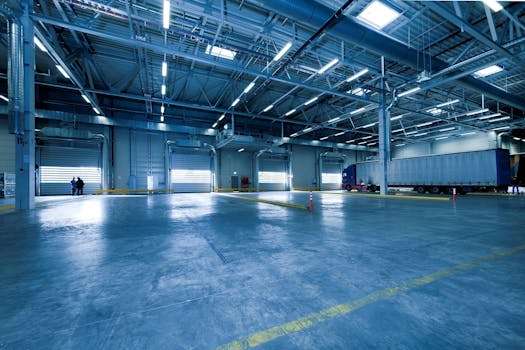
Most people who talk about industrial real estate are talking about the wrong thing.
They're imagining massive warehouses on the edge of town. The kind Amazon leases by the million square foot. Those buildings grabbed all the headlines during the e-commerce boom. And now, many of them sit partly empty as big tenants pull back and absorption slows.
The better story is smaller and quieter. It's the flex bay industrial building. A few thousand square feet. Roll-up door in back. Small office up front. A local plumber parks his van there. An e-commerce seller ships orders from there. A light manufacturer assembles parts there. These buildings are everywhere, and right now they're nearly impossible to find vacant.
If you're an investor, a developer, or a business owner thinking about buying instead of renting, this article covers what flex bay industrial actually is, what the Texas market looks like right now, and how financing works when you're ready to move.
What Is Flex Bay Industrial Space?
Flex bay industrial goes by several names: small-bay industrial, shallow bay, light industrial, multi-tenant industrial. The names vary, but the product is the same.
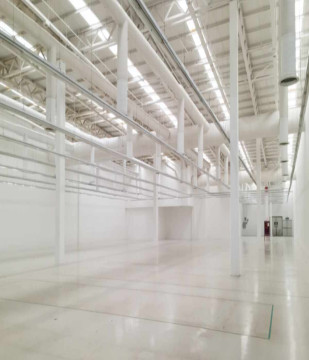
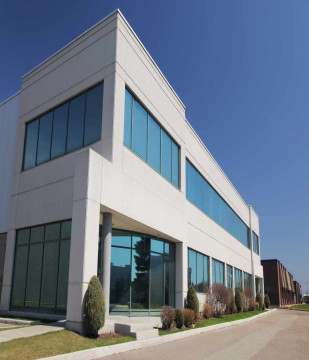
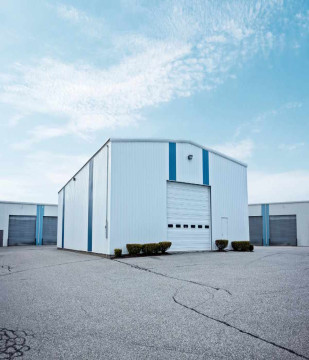
It's a building, usually between 5,000 and 50,000 square feet total, divided into individual units ranging from about 1,000 to 10,000 square feet. Each unit typically combines a small office or showroom up front with a warehouse or shop space in back, complete with a roll-up or overhead door. Ceiling heights usually run 14 to 24 feet, and the layouts are easy to reconfigure.
Think about what that covers. A HVAC contractor needs a place to store equipment, park trucks, and run a small office. A specialty food maker needs to produce in a licensed commercial kitchen and ship product. A medical device repair company needs clean workspace and a receiving dock. None of them need 50,000 square feet. All of them need something a standard office building or retail strip cannot provide.
That's the flex bay. It fills a gap that no other property type fills.
Flex vs. Traditional Industrial
Traditional big-box industrial is built for single tenants with specific needs: tall ceilings (30 to 40 feet), large truck courts, heavy power. It works at scale. Flex bay is different. It serves multiple smaller tenants under one roof, which means built-in income diversification. If one tenant leaves, you still have the other eight.
The office component also matters. Flex properties typically carry 25 to 50 percent office buildout, which adds to value and attracts a wider range of users than a pure warehouse ever could.
The Texas Flex Bay Market Right Now
The numbers here are worth sitting with for a moment.
Across the country, industrial properties under 50,000 square feet carry vacancy rates well below the broader industrial market. Big-box warehouse vacancy nationally has climbed toward 8 percent. Small-bay? Still running close to 5 percent or lower in most markets. That gap is large and it's been persistent.
Texas is especially interesting because it's one of the few places where developers have actually added new small-bay supply in recent years, and demand has kept right up with it.
Dallas-Fort Worth
DFW is the largest flex industrial market in Texas by total inventory. The data tells a consistent story: flex space here outperforms everything else.
In Q4 2025, the overall DFW industrial vacancy rate sat at 9.2 percent. Warehouse and distribution space carried 10.1 percent vacancy. Manufacturing held 4.2 percent. And flex? Flex came in at 6.6 percent, the tightest of the three major product categories tracked, and well below the pre-pandemic average.
Rental rates for flex space in DFW average around $13 to $14 per square foot annually, significantly above the $9 to $10 average for warehouse space in the same market. In premium submarkets like Northwest Dallas and DFW Airport, rates push even higher.
Cap rates for stabilized flex and small-bay assets in DFW have been running in the low-to-mid 6 percent range, attractive relative to the risk profile.
Houston
Houston's flex market has been remarkably steady. Unlike big-box warehouse, which has seen elevated vacancy from speculative overbuilding, the small-bay and flex segment continues to attract users who can't find space elsewhere. Leasing remains strong among smaller tenants: owner-operators, trade businesses, logistics companies running last-mile operations. These users move quickly when the right space opens up.
Cap rates in Houston flex have expanded slightly but quality assets still trade at a premium. Lenders remain active here for stabilized product.
Austin and San Antonio
Austin has seen more volatility because of the tech sector's influence on commercial real estate broadly. But flex industrial in Austin has held up well, partly because the tech downturn doesn't affect the local plumber or the small manufacturer the same way it affects an office tenant. Small-bay inventory in Austin and San Antonio has grown at more than four times the national growth rate over the past five years. And still, vacancy remains tight.
San Antonio's flex inventory is smaller overall, but the fundamentals are clean. Vacancy has trended down. Supply has been limited. New product that gets delivered tends to lease quickly.
The Supply Gap Is Real
Here's what makes this property type so interesting from an investor's standpoint. Nationally, properties under 25,000 square feet make up nearly 30 percent of existing industrial stock. But they account for less than 2 percent of what is currently under construction.
That imbalance has been the story for years. It's not going away soon. Construction costs for light industrial in Texas currently run from roughly $245 to $335 per square foot, and land costs have risen sharply in most metro areas. Building small-bay only makes financial sense when rents are high enough to support those costs. We're there now in most Texas markets, but the pipeline is still just starting to catch up.
The practical result for investors: when you buy a stabilized, multi-tenant flex bay asset in a well-located Texas submarket, you're buying into a product type that tenants need and cannot easily replace.
Who Uses Flex Bay Space?
The tenant base for flex industrial is one of its best features. These are small, independent businesses. They're not going remote. They're not cutting space because of hybrid work policies. They need the physical location to operate.
Common flex bay tenants include contractors (electrical, plumbing, HVAC, roofing), e-commerce sellers who ship physical goods, light manufacturers and assembly operations, auto service businesses, medical and dental equipment suppliers, specialty food and beverage producers, and distribution companies serving local or regional markets.
Take a 20-unit flex bay building in the suburbs of Dallas. You might have a pool company storing chemicals and equipment in two bays. A small brewery aging product in another. A commercial kitchen supplying local restaurants in a unit with upgraded ventilation. A medical device repair shop in a cleanroom setup. Each one of those tenants arrived independently, found the space fit their needs, and signed a lease with commercial terms. That's the nature of the asset.
Multi-tenant diversification means a single vacancy doesn't threaten the income stream the way it might with a single-tenant industrial building.
Financing Flex Bay Industrial in Texas
Most flex bay industrial deals are financed through one of four main loan structures: bank loans, CMBS, SBA loans, or bridge financing. Which one fits depends on the deal size, the borrower's situation, whether the property is stabilized, and how long the borrower plans to hold.
Bank Loans
Community and regional banks have traditionally been active lenders on flex industrial, particularly for smaller deals and owner-occupied properties. Terms typically run 5 to 10 years with 20 to 25 year amortization, at 65 to 75 percent LTV. Banks like the asset class because the properties have good liquidity, multi-tenant income reduces risk, and the tenant base tends to be stable.
The tradeoff is that bank loans often come with recourse requirements and shorter term periods, which may not suit all investors. For owner-occupants who plan to hold long-term, bank debt can work well.
CMBS Loans
Commercial Mortgage-Backed Securities loans are a strong option for investors seeking non-recourse financing on stabilized flex properties. Typical CMBS terms run 5 to 10 years, fully amortizing or with balloon payments, at 65 to 75 percent LTV. Prepayment is generally restricted through defeasance or yield maintenance, so these loans work best for investors with a longer hold horizon.
CMBS lenders generally want to see a stabilized asset with a strong rent roll, creditworthy tenants, and DSCR above 1.25. For a 15,000-square-foot flex building in McKinney with eight tenants and 95 percent occupancy, CMBS is often a competitive option.
SBA Loans (7a and 504)
If a business owner is buying a flex bay property for their own use, SBA financing is worth a close look. The SBA 504 program allows for loan amounts up to $5.5 million with down payments as low as 10 percent, long amortization (up to 25 years), and fixed rates on the debenture portion. SBA 7(a) loans offer more flexibility in structure and can go up to $5 million.
The key requirement: the borrower must occupy at least 51 percent of the building for a purchase, or 60 percent for new construction. Many small businesses buying flex space for their own operations qualify. Owner-occupant buyers who do not want to tie up a large down payment often find SBA 504 to be the most effective tool in the market.
Bridge Loans
Bridge financing is the right call when a property isn't ready for permanent debt. A flex bay building that was 60 percent occupied at acquisition, or a project that just completed construction and is leasing up, won't meet CMBS or bank stabilization requirements.
Bridge loans typically run 12 to 36 months at higher rates, with interest-only payments, giving a borrower time to stabilize the asset before refinancing into permanent debt. For a developer delivering 24 new flex bays in the Prosper submarket north of Dallas, a bridge loan covers the lease-up period before a CMBS take-out makes sense.
Life Company Loans
Life insurance companies, which manage large investment portfolios funded by insurance premium reserves, tend to be the most conservative industrial lenders. They target stabilized, Class A assets with long-term creditworthy tenants. A well-located, fully leased flex industrial park with strong in-place rents and a clean title can attract life company debt at some of the most competitive fixed rates available. The tradeoff is stricter qualification criteria and longer closing timelines.
What Lenders Look at When Underwriting Flex Industrial
Lenders across the board focus on a few core metrics when they look at a flex bay deal.
Occupancy and lease term are the first screen. A property with 90 percent occupancy and weighted average lease terms of three or more years is a different conversation than one with 60 percent occupancy and month-to-month leases. Most permanent lenders want stabilized occupancy in the 85 to 90 percent range.
DSCR is critical. Permanent lenders generally require debt service coverage of at least 1.20 to 1.25. On a $3 million loan at current rates, that means the property's net operating income needs to support the debt comfortably. Lenders want room for vacancies, maintenance, and rate adjustments.
Location and submarket matter. A flex bay building along a busy thoroughfare in a high-growth submarket like Frisco or Pflugerville underwrites differently than one in a tertiary market with limited tenant demand. Proximity to population centers, labor availability, and highway access all affect how lenders view risk.
Tenant credit quality plays a role, but not the same way it does with single-tenant net-lease properties. Multi-tenant flex buildings are underwritten more on the rent roll as a whole than on any single tenant's financials.
Buying vs. Leasing: What Business Owners Should Know
Business owners in Texas often ask whether it makes more sense to lease or buy their flex space. The honest answer depends on capital, growth plans, and how long they expect to stay.
The case for buying is straightforward. Lease payments build no equity. A 10-year lease on a 3,000-square-foot flex bay might cost $400,000 in total rent with nothing to show for it at the end. That same $400,000 in debt service on an SBA 504 purchase builds equity in a physical asset, which appreciates, provides a hedge against rising rents, and can eventually be sold or refinanced to fund business growth.
The case for leasing is also real. Buying ties up capital. A growing business that might need different space in three years is better off with a short-term lease than an SBA loan. And not every business owner wants to manage a property even if it's their own.
For business owners who know they're staying put and whose operations fit the flex bay format, buying often wins over a 10-year horizon.
Practical Steps for Investors and Buyers
If you're thinking about a flex bay acquisition in Texas, a few things will move faster if you do them upfront.
Understand your hold period before you choose a loan structure. A 5-year hold with a CMBS prepay penalty creates a mismatch. A bank loan with a 3-year call might work better for a value-add play. Match the financing to the plan, not the other way around.
Get a rent roll analysis done early. Lenders will ask for it, and knowing the weighted average lease term, rent per square foot relative to market, and tenant concentration before you go to contract helps you underwrite the deal accurately and avoid surprises.
Check zoning carefully in Texas. Light industrial zoning varies by municipality, and some uses that look fine on paper are restricted in certain jurisdictions. This is especially true in fast-growing suburban markets where zoning maps haven't kept pace with development patterns.
Work with a broker who knows the capital stack. Flex bay industrial doesn't fit neatly into one loan program. The difference between a bank loan, a CMBS note, and an SBA 504 can mean hundreds of thousands of dollars in total cost over a 10-year hold. A commercial mortgage broker with relationships across the lender spectrum can find the structure that fits.
The Bigger Picture
Flex bay industrial is not a trend. It's a permanent feature of the commercial real estate landscape.
Every metro area needs this product. The electricians, the small manufacturers, the e-commerce operators, the contractors: they all need a place to work that isn't an office and isn't a 100,000-square-foot warehouse. And for decades, not enough of it got built. That's the gap investors are stepping into.
In Texas, the combination of strong population growth, business-friendly policy, and significant in-migration of companies and workers has created durable demand for light industrial space at every scale. The flex bay market in DFW, Houston, Austin, and San Antonio reflects that. Vacancy is tight. Rents are rising. Cap rates are reasonable.
None of that changes overnight. The supply pipeline is just starting to catch up. For investors who get in now, stabilized flex bay assets in good Texas locations are the kind of holdings that hold up through cycles.
Get Help Financing a Flex Bay Industrial Property
Whether you're acquiring a stabilized multi-tenant flex park in DFW or building new flex bay units in a fast-growing Texas submarket, the financing options are varied and the right structure matters. Terrydale Capital works with investors and business owners across Texas to find the loan programs that fit the deal. Explore our commercial loan programs or
contact us directly to talk through your flex bay industrial financing needs. We have relationships across the full lender spectrum, from community banks and CMBS shops to SBA lenders and bridge providers, and we'll help you find the right fit for your deal.
Partner With Terrydale Capital for Your Debt Financing Needs
When it comes to debt financing, understanding the right timing, process, and options is crucial. At Terrydale Capital, we provide a comprehensive range of commercial loan solutions tailored to meet your business's unique needs.



















































Success!
Product has been created successfully!
Headquartered in Dallas, Texas, Terrydale Capital is a leader in commercial real estate financing. We have close relationships with the nation’s top banks, lenders & family offices allowing us to provide the most competitive financing solutions in the market.


