How to Refinance a Commercial Property in Texas When Your Loan Is Maturing

Terrydale Capital
Jun 29, 2026 12 Min read
If your commercial loan is coming due in 2026, you're not alone — and you're not out of options. But you do need to move faster than you might think.
Across Texas, billions in commercial real estate debt originated in the 2016–2019 era is hitting maturity this year, often at rates far higher than what borrowers originally locked in. That gap between old terms and today's market is where deals get complicated, delayed, or lost entirely. The borrowers who navigate it well have one thing in common: they started early and had a clear game plan.
Here's how to build yours.
Start the Conversation Earlier Than Feels Necessary
The single most costly mistake in commercial refinancing is waiting too long. By the time most borrowers start calling lenders, they've already lost negotiating leverage — and sometimes they're in default territory before they realize it.
A realistic refinancing timeline looks like this:
- 12–18 months out: Start internal conversations. Where does the property stand financially? What's the current occupancy? Has NOI grown or shrunk since the original loan?
- 9–12 months out: Begin lender outreach and pull together your financial documentation. This is also the time to identify whether you need a bridge loan to buy more time, or whether you're ready for permanent financing.
- 6–9 months out: Formal underwriting begins. Appraisals, environmental reviews, and title work all take time — plan on 90 to 120 days for a standard commercial close, longer for complex deals.
The math here is simple: a commercial loan doesn't close in two weeks. If you wait until 60 days before maturity to start the process, you're already in trouble.
Know What's Actually on the Table in Today's Market
Before you can evaluate a refinance, you need an honest read on what current loan products look like — and they vary dramatically by asset type, leverage, and deal structure.
As of 2026 in Texas:
- Agency multifamily (Fannie/Freddie): Still the tightest spreads in the market. If you own stabilized apartments, this is often your best path.
- Conventional bank financing: Typically starts around 5–6% for strong deals, but underwriting has tightened. Banks want clean DSCR, occupancy, and sponsor track record.
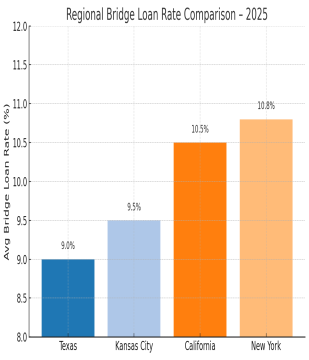
- Bridge loans: Right for properties in transition — lease-up, renovation, or repositioning. Expect rates in the 7–11% range depending on the asset and lender.
- SBA 504/7(a): If you're owner-occupying your commercial space, SBA products can get you to 90% LTV at rates that beat most conventional options.
- Hard money / private lending: A last resort when timing is critical and conventional options aren't available. Rates typically run 10%+ with upfront points. Expensive — but sometimes it's the bridge that buys you time for a better outcome.
The gap between the cheapest and most expensive option can easily represent hundreds of thousands of dollars over the life of a loan. This is why matching the right product to your deal matters as much as the rate itself.
Get Your Financial House in Order First
Lenders underwrite the property and the borrower. If either has problems, your terms suffer — or you don't get approved at all.
Before you go to market for a refi, audit these:
On the property side:
- Current rent roll and occupancy — anything below 85–90% will require explanation
- Trailing 12-month income and expense statements (T-12)
- Current leases, including any upcoming expirations
- Outstanding deferred maintenance or capital expenditures
On the borrower side:
- Personal financial statement and net worth verification
- Schedule of real estate owned
- Any covenant breaches on the existing loan — be upfront about these; lenders generally respond better to transparency than surprises
- Entity documentation (operating agreements, K-1s, etc.)
If your DSCR has slipped or occupancy has softened, that doesn't automatically kill a refinance — but it does change which lenders and products are realistic. Knowing where you stand before you start shopping is what separates a clean process from a scramble.
Don't Just Call Your Current Lender
It's natural to call the lender who holds your current note first. But your existing lender isn't always your best option — and in 2026, many banks are at capacity on commercial real estate exposure and are quietly not renewing deals they'd have happily extended two years ago.
Shopping your deal across multiple lender types — banks, life companies, debt funds, agency lenders, CMBS — gives you real market intelligence and genuine leverage. A broker with active relationships across all of these channels can often surface terms that a single lender relationship never would.
What to compare when evaluating offers:
- Rate and spread (fixed vs. floating)
- Loan-to-value and proceeds
- Prepayment structure (yield maintenance, step-down, or open)
- Recourse vs. non-recourse
- Extension options if the property needs more time to stabilize
- Closing timeline — a better rate that takes six months longer to close may not actually be better for your situation
Understand Your Options If the Numbers Don't Pencil
Not every maturity situation leads to a clean refinance at the terms you want. If property values have shifted or NOI hasn't grown the way the original underwriting assumed, you may need a creative approach:
- Bring equity to the table. Paying down principal at refinance reduces LTV and unlocks better rates and higher proceeds in future deals.
- Bridge to stabilization. If the property needs 12–24 months to hit its potential, a short-term bridge loan can buy that time before transitioning to permanent financing.
- Bring in a capital partner. Equity partners or preferred equity can fill gaps between what the property qualifies for and what you owe.
- Explore loan assumption. If the seller of your next acquisition has assumable agency debt, that's worth serious attention in a higher-rate environment.
- Negotiate with your existing lender. Many lenders will extend or modify a maturing loan for a fee — especially if you approach them six to nine months early with a clear plan. Wait until 30 days before maturity and that conversation gets much harder.
The Texas Market Context That Matters Right Now
Texas continues to be one of the most active commercial real estate lending markets in the country. Population growth, business relocations, and diversified demand across asset types mean that lenders — including those who've pulled back in other markets — remain active here.
That said, the market isn't uniform:
- Dallas-Fort Worth remains the most liquid market in the state for multifamily, industrial, and increasingly data center financing
- Houston is seeing renewed investment activity, particularly in industrial and energy-adjacent real estate
- Austin–San Antonio is emerging as a data center corridor, which is bringing specialized financing products into the market
For borrowers in secondary Texas markets, lender options may be narrower, making broker relationships and lender diversity even more valuable.
Final Thought: Time Is the Variable You Control
Interest rates, property values, and lender appetite are largely outside your control. Your timeline isn't. Starting the refinancing process 12 to 18 months before maturity gives you options. Starting at 60 days gives you panic.
If you have a Texas commercial loan maturing in 2026 or 2027, the time to begin is now — even if it feels early. Understanding your options, knowing what the market will support, and having a financing partner with real lender relationships makes the difference between a smooth transition and a distressed situation.
Terrydale Capital specializes in commercial refinancing across Texas, with direct relationships across banks, life companies, debt funds, and agency lenders. Get in touch to start a conversation about your maturing loan.
Partner With Terrydale Capital for Your Debt Financing Needs
When it comes to debt financing, understanding the right timing, process, and options is crucial. At Terrydale Capital, we provide a comprehensive range of commercial loan solutions tailored to meet your business's unique needs.









































































Success!
Product has been created successfully!
Headquartered in Dallas, Texas, Terrydale Capital is a leader in commercial real estate financing. We have close relationships with the nation’s top banks, lenders & family offices allowing us to provide the most competitive financing solutions in the market.


