Financing Data Centers and Powered Land in Texas: What Developers and Investors Need to Know in 2026

Terrydale Capital
Aug 3, 2026 24 Min read
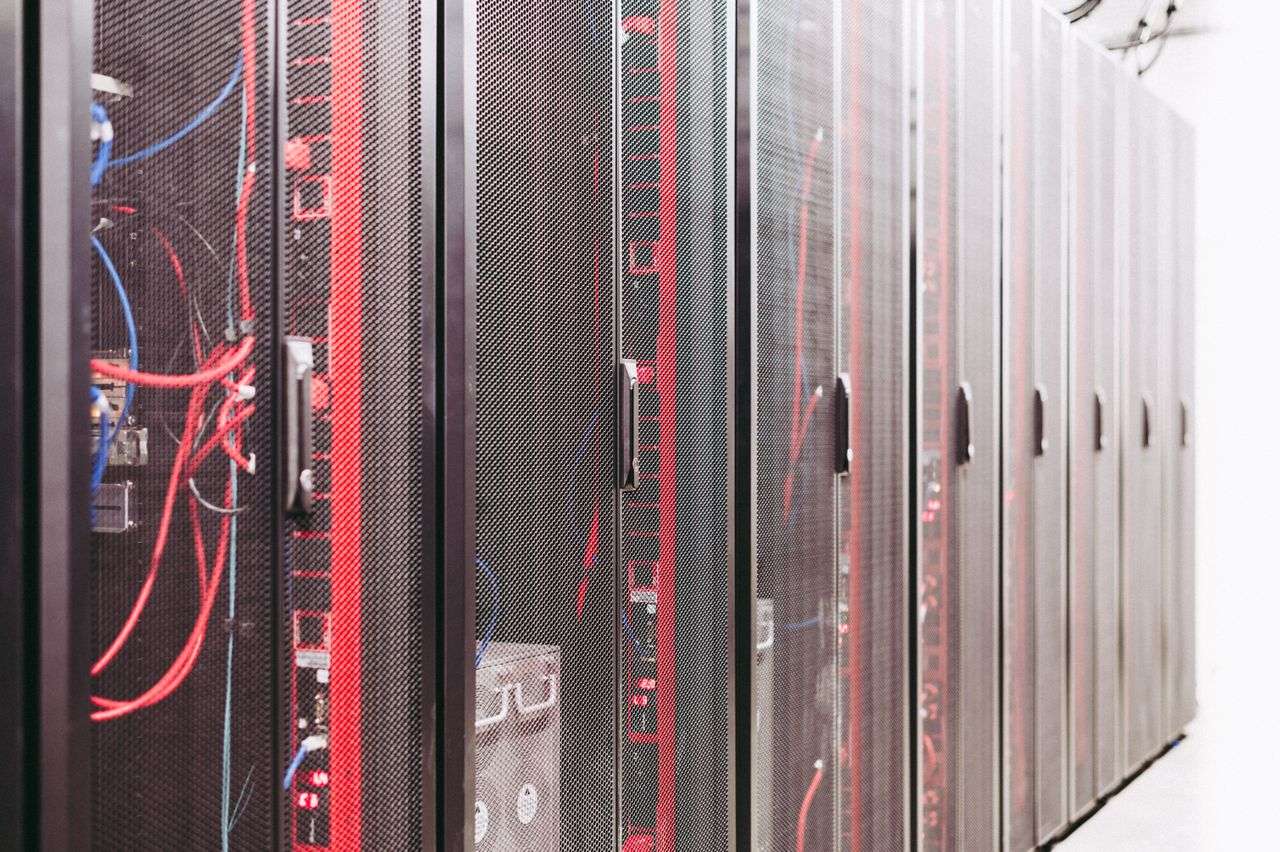
Texas has become one of the most consequential data center markets in the world. The speed of that transformation has been remarkable, and so has the complexity of financing it. Unlike conventional commercial real estate, where the asset is relatively straightforward to underwrite, data centers and the powered land that supports them sit at the intersection of real estate, infrastructure, and energy — and lenders treat them accordingly.
Whether you are a developer pursuing ground-up construction, an investor acquiring powered land for future development, or an operator looking to refinance a stabilized facility, the financing landscape for this asset class is unlike anything else in commercial real estate. This guide breaks down how it works, what lenders require, and what investors and developers in Texas need to understand before they go to market.
Why Texas, and Why Now
The data on Texas data center growth is hard to overstate. The Dallas-Fort Worth colocation market now has approximately 1 GW of online capacity, with 700 MW under construction and an additional 3 GW of greenfield development planned. That pipeline represents one of the largest concentrations of data center investment anywhere in the world.
Dallas-Fort Worth jumped two spots to become the third-largest data center market in North America in Q1 2026, posting an inventory gain of 379.9 MW, a 43.7% increase driven by demand from hyperscalers, AI startups, and enterprise tenants.
Statewide, Texas carries 6.5 GW of data center capacity under construction, putting it on track to potentially overtake Virginia as the largest data center state in the country by 2030. Property tax abatements under the Jobs, Energy, Technology, and Innovation Act, known as JETI, continue to sharpen the cost advantage for Texas-based development, and wind energy power purchase agreements reduce operating expenses for facilities aligned with sustainability mandates.
The driver behind all of this is AI. Training and inference workloads require far more power density than conventional computing, and the hyperscalers chasing that capacity need sites that can deliver power at scale, quickly. Texas checks more of those boxes than almost any other state.
That demand has moved well beyond Dallas. Austin's data center boom is spreading across a broader corridor from Temple to San Antonio, where land, utilities, and entitlements align, with the market no longer centered only on Austin itself. For investors and developers, the entire Texas grid corridor is now in play.
What Powered Land Is and Why It Commands a Premium
To understand data center financing in Texas, you first have to understand powered land, because it has become its own distinct asset class.
Powered land is a parcel that has already secured meaningful electrical capacity from the utility, typically measured in megawatts, along with the necessary entitlements, fiber access, and in many cases some site preparation work. It is not a building. It is not a data center. It is land that has been de-risked enough to make data center development feasible on a defined timeline.
The value difference between raw land and powered land is enormous. Powered land in U.S. markets has been trading at meaningful premiums over conventional industrial land, often in the 1.63x to 2.5x range nationally and materially higher in power-constrained markets. In Texas submarkets where power access is limited, that premium goes higher still.
High demand has continued to throttle power delivery in DFW, and the market has implemented new controls to restrict entry into the power queue. This means a site with confirmed power capacity is not just convenient — it is a strategic asset that becomes harder to replicate every quarter. Developers who land-banked powered sites in 2022 and 2023 are now sitting on assets worth substantially more than what they paid, even before a single building goes vertical.
For lenders, this creates both opportunity and complexity. Raw land is typically the hardest commercial real estate asset to finance. Powered land with confirmed utility commitments, fiber access, and entitlements is a different conversation entirely — and the right lenders treat it that way.
The Four Stages of Data Center Financing
One of the most useful frameworks for understanding data center capital is to think about financing in stages. Each stage has different lenders, different costs, and different requirements. Where your project sits on this ladder determines what capital is available to you and at what price.
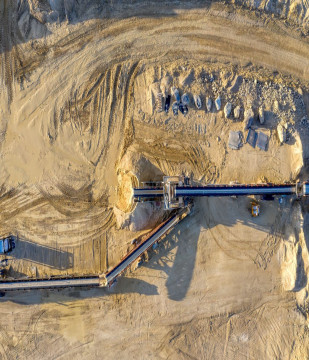
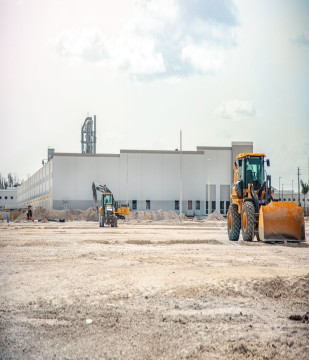
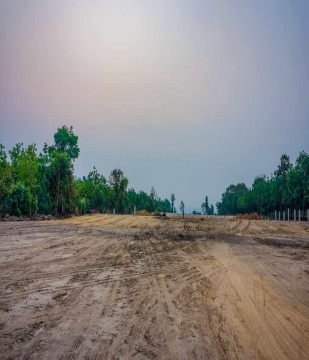
Stage one: Raw or pre-entitled land. This is the hardest stage to finance conventionally. Without confirmed power, entitlements, or a clear development timeline, most institutional lenders will not engage. Capital at this stage is primarily equity, family office money, or in some cases government grants tied to economic development incentives. Terrydale's commercial land financing program handles land acquisition across Texas, and for sites with a credible path to power access and entitlement, there are more lender conversations available than most developers realize.
Stage two: Powered and entitled land with infrastructure in place. Once a site has confirmed utility capacity, executed entitlements, fiber pulled to the street, and basic site infrastructure installed, it becomes what lenders call "bankable." At this stage, lenders need to see signed Master Service Agreements with committed monthly recurring revenue, not just letters of intent. LOIs are not enough to unlock institutional debt. Land-cost facilities, a relatively new product in the data center capital stack, are specifically designed to finance these sites before vertical construction begins. They are growing in use as developers race to secure powered inventory.
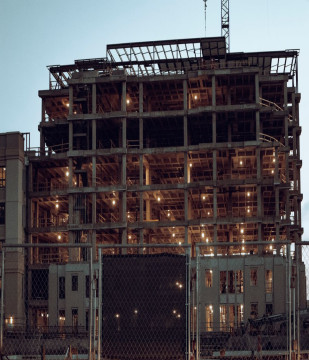
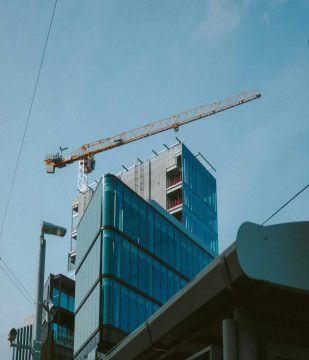
Stage three: Construction. Ground-up data center construction financing in 2026 is active and competitive for the right deals. Lenders see an underlying stream of cash flows coming from hyperscalers who are very high investment grade-rated counterparties, and they are doing long-term transactions of 10 to 20 years with significant barriers to entry. That counterparty quality is what makes construction financing for pre-leased data centers work. A shell industrial building under construction with no tenant is a difficult loan. A data center under construction with a signed 15-year lease from a hyperscaler is a project finance deal with institutional appetite. Terrydale's construction financing program covers ground-up development across Texas, and the team works regularly with lenders who understand data center-specific underwriting.
Stage four: Stabilized facilities. Once a data center is operational and generating contracted revenue, it accesses the broadest range of permanent financing products. Stabilized assets can access ABS facilities, 144A bond offerings, and CMBS structures. The ABS market for data centers currently stands at approximately $25 billion but faces projected take-out needs approaching $300 billion as the development pipeline matures. CMBS execution is also available for qualifying stabilized facilities with strong occupancy and creditworthy tenants. For more on current rates and permanent loan benchmarks, Terrydale's commercial index rate page is updated regularly with current market pricing.
How Lenders Underwrite Data Centers Differently
If you have financed conventional commercial real estate before, some of what lenders require on data center deals will feel familiar. Much of it will not.
The core underwriting difference is that data centers are valued primarily on contracted power revenue, not on traditional real estate metrics like price per square foot or cap rate on a trailing NOI. A 50,000 square foot data center generating $8 million per year in contracted revenue from a single investment-grade hyperscaler is underwritten very differently from a 50,000 square foot office building generating $8 million in rent from a collection of mid-market tenants. The credit quality, lease structure, and replacement risk are fundamentally different assets even at identical square footage and income.
Key metrics lenders focus on for data center deals:
Megawatt capacity and utilization. Power capacity is the primary unit of measure. Lenders want to know how many MW are installed, how many are contracted, and what the path to full utilization looks like. DFW's existing colocation inventory is approximately 94.5% preleased, which tells lenders that demand is real and stabilized occupancy is achievable.
Tenant credit quality and lease term. A 15-year lease from Amazon Web Services, Microsoft Azure, or Google is a fundamentally different credit profile from a shorter-term enterprise tenant. Lenders price the spread accordingly. Transactions with investment-grade hyperscaler tenants on long-term contracts of 15 to 20 years have attracted interest from traditional project finance lenders, private credit funds, and regional banks alike.
Power cost and structure. Operating expenses for data centers are dominated by power costs. Lenders will underwrite the power purchase structure, whether the operator is buying off the grid, from a PPA, or through behind-the-meter generation, and they will stress those costs under adverse scenarios.
Cooling technology and infrastructure. As AI workloads push rack power density to levels that conventional air cooling cannot handle, lenders are asking questions about liquid cooling capacity. Facilities with outdated cooling infrastructure face both operational risk and financing risk.
Fiber and network connectivity. A data center without diverse, redundant fiber connectivity is not a competitive asset. Lenders treat fiber access as a fundamental underwriting requirement, not a nice-to-have.
The Capital Structure for Data Center Development
Data center development capital structures are more layered than conventional construction deals. Understanding the typical stack helps developers know which conversations to have and in what order.
At the foundation is equity, either from the sponsor, a joint venture partner, or institutional co-investors. Structured preferred equity investments and joint ventures remain popular for data center developments, as do forward sale constructs that allow developers to free up sponsor capital earlier in the process by selling in-development projects while retaining completion risk. Ropes & Gray
Construction debt sits above equity. For pre-leased facilities, lenders will typically advance 50% to 65% of total project cost, with the exact amount driven by the credit quality of the tenant, the sponsor's track record, and the strength of the power contract. For speculative construction with no pre-leasing, debt is significantly more constrained and expensive.
Land-cost facilities are a newer addition to the stack. Platforms are land-banking assets in development vehicles and tapping the emerging market for land-cost facilities. Debt capital is arriving earlier in development than ever before, with GPU financings, land-cost facilities, and hybrid structures collateralized by contracted asset bases emerging as tools for earlier-stage capital. These products are allowing developers to monetize powered land positions before construction begins, which was not meaningfully available two years ago.
For deals where the capital structure needs creative structuring or where a sponsor is not yet in front of the right lenders, Terrydale's advisory and consultation team works through exactly these questions before a deal goes to market, which saves time and protects against costly misalignment between the deal and the lender.
Texas-Specific Considerations for Data Center Financing
Financing a data center in Texas carries some specific considerations that are different from other markets.
ERCOT grid dynamics. Texas operates on its own grid, managed by ERCOT, which is both an advantage and a complexity. Texas has abundant wind and solar generation capacity and historically competitive power prices. But high demand continued to throttle power delivery in DFW in 2026, and the market has implemented new controls to restrict entry into the power queue. Developers who have not yet secured a position in the power queue face significant timeline risk. Lenders understand this and will scrutinize power access at every stage of underwriting.
Behind-the-meter power solutions. Because ERCOT grid access is constrained, many large data center developers are pursuing behind-the-meter power, meaning on-site generation through natural gas, solar, or other sources that bypass the utility queue entirely. These solutions are more expensive to build but solve the power access problem. Lenders are becoming more familiar with behind-the-meter structures, though underwriting them is more complex than a conventional utility-served facility.
Property tax abatements. The JETI Act provides data center developers in Texas with meaningful property tax relief tied to capital investment and job creation thresholds. These abatements can represent tens of millions of dollars in savings over a project's life and materially improve the economics that lenders underwrite. Working with local economic development offices to secure JETI benefits before finalizing a capital structure is worth doing early.
Submarket selection. Not all Texas markets offer the same data center financing environment. DFW remains the most liquid market with the deepest lender relationships and the most transaction comparables. Within DFW, Plano, Garland, and Red Oak are rising fast as data center submarkets, with Skybox, DataBank, and Google among the most active developers. Outside DFW, the Austin-San Antonio corridor is emerging as a secondary market with its own power and fiber infrastructure. For a deeper look at why DFW became the center of this market, Terrydale's article on why Dallas is America's new data center capital covers the market drivers in detail.
What Separates Financeable Deals from Ones That Stall
In our experience placing data center and powered land financing in Texas, the deals that move cleanly share a few consistent characteristics. The deals that stall share different ones.
Deals that close on schedule come in with confirmed power positions, not pending applications. They have tenant conversations underway, even if leases are not fully executed. They have sponsors with relevant track records, either in data centers or in large-scale commercial development with credible data center partners. They have realistic project budgets with proper contingency, and they have a clear answer for how the construction loan gets taken out.
Deals that stall usually have one of a few problems. The power position is uncertain. The sponsor is entering the asset class for the first time without an experienced operating partner. The capital stack has a gap between what equity can provide and what a lender will advance. Or the project is positioned as institutional-scale data center development when the actual execution plan is better suited to a smaller industrial or flex product.
Knowing which category your deal falls into before you engage lenders is valuable. Terrydale's team works through this assessment with clients regularly and can give an honest read on where a project fits in today's market.
Data center and powered land financing in Texas is one of the most active and complex corners of commercial real estate capital markets in 2026. The demand is real, the pipeline is massive, and lenders are actively building expertise in this asset class. But the underwriting is fundamentally different from conventional commercial real estate, and developers or investors who approach these deals with traditional CRE assumptions tend to find out the hard way.
Reach out to our team here to discuss your data center or powered land financing needs.
Partner With Terrydale Capital for Your Debt Financing Needs
When it comes to debt financing, understanding the right timing, process, and options is crucial. At Terrydale Capital, we provide a comprehensive range of commercial loan solutions tailored to meet your business's unique needs.

















































Success!
Product has been created successfully!
Headquartered in Dallas, Texas, Terrydale Capital is a leader in commercial real estate financing. We have close relationships with the nation’s top banks, lenders & family offices allowing us to provide the most competitive financing solutions in the market.


