Commercial Construction Loans: How They Work and What Texas Developers Need to Know

Terrydale Capital
Jul 6, 2026 19 Min read
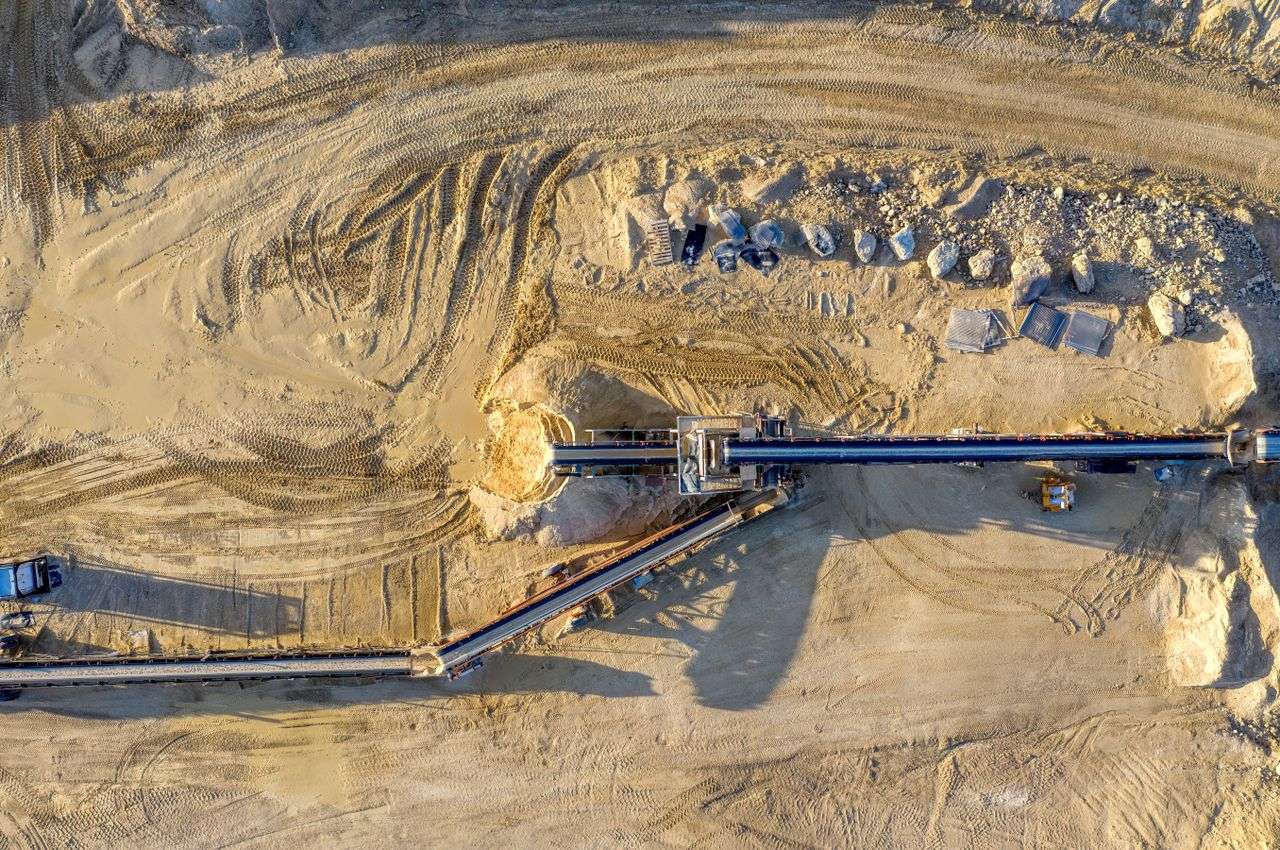
Building a commercial property from the ground up is a fundamentally different financial exercise than buying one that already exists. When you buy a stabilized building, a lender can look at the rent roll, run the numbers, and have a clear picture of what they are lending against. When you build, none of that exists yet. There is only a plan, a budget, and a team.
That reality shapes everything about how construction loans are structured, underwritten, and managed. Understanding how the financing works before you start a project is not just helpful — it is the difference between a project that closes on schedule and one that stalls halfway through because the capital stack was not built correctly from the beginning.
What a Commercial Construction Loan Actually Is
Think of a commercial construction loan like a line of credit with a specific job to do. Unlike a traditional mortgage where the lender hands you a check at closing and you start making payments, a construction loan works on a draw system. The lender commits to a total loan amount upfront, but only releases funds in stages as the project hits predefined milestones, site work complete, foundation poured, framing up, MEP rough-in finished, and so on.
This matters for two reasons. First, you are only paying interest on the funds that have actually been drawn, not the full loan commitment. If you have a $5 million construction loan but have only drawn $2 million, your interest accrual is on $2 million. Second, the draw process creates a built-in checkpoint system. Lenders typically require an inspection before releasing each draw, which means they are verifying that the work is actually done before the money goes out the door.
Construction loans are short-term, typically running 12 to 36 months, with interest-only payments during the build period. Once the building is complete and the project stabilizes, the construction loan is either paid off through a sale or refinanced into permanent financing — a process commonly called a "construction-to-perm" or "take-out" refinance.
How Construction Loan Rates Are Priced
Construction financing currently ranges from 5.50% to 8.75%, and these are interest-only during the build period, typically 12 to 36 months, with LTVs maxing out around 75% of the completed value.
The rate on your construction loan is almost always floating, tied to SOFR or prime, plus a spread that reflects the lender's assessment of the project risk. Unlike permanent financing where a 10-year Treasury benchmark drives pricing, construction lenders price primarily on the risk of execution, can this developer deliver this project on time and on budget?
A few factors that move your rate up or down:
Your experience as a developer matters more in construction lending than in almost any other loan type. A developer with five delivered projects who is building a similar sixth gets meaningfully better terms than a first-timer attempting the same project. Lenders know that most construction problems are execution problems, and experience is the closest thing to insurance they have against that risk.
Project type affects pricing significantly. Ground-up multifamily in a strong submarket is one of the more lender-friendly projects in today's market. Speculative office in a secondary location is the opposite. The further a project sits from what lenders consider core and predictable, the higher the rate.
Sponsor liquidity and net worth are scrutinized closely. Getting a construction loan approved in today's market requires a strong sponsor, a solid budget, and a clear exit strategy. Lenders want to know that if the project runs over budget by 15%, the developer has the resources to fund the gap rather than coming back to renegotiate the loan.
The Loan-to-Cost Structure You Need to Understand
Construction loans are generally underwritten on a loan-to-cost basis rather than loan-to-value. This is an important distinction. Loan-to-value asks: what is this property worth? Loan-to-cost asks: how much does it cost to build, and how much of that cost will the lender fund?
Most construction lenders in 2026 will fund between 60% and 75% of total project cost, which includes land, hard construction costs, soft costs like architecture and engineering, financing costs, and a contingency reserve. The developer funds the remaining 25% to 40% through equity, either cash, a land contribution, or a combination.
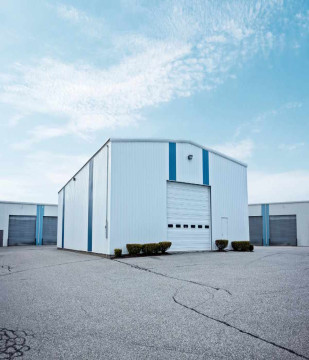
Here is a simplified example. A developer is building a 50,000 square foot industrial flex building in north Dallas with a total project cost of $8 million. At 65% loan-to-cost, the construction loan covers $5.2 million. The developer needs to bring $2.8 million in equity to close. That equity typically goes in first, before the lender starts funding draws, which is the lender's way of ensuring the developer has real skin in the game before the bank's money starts moving.
The lender will also commission an independent appraisal of the completed project value, often called an "as-complete" appraisal. If that appraised value does not support the loan amount on an LTV basis as well, the lender may reduce the loan size — which is why over-building for the market is a real underwriting risk, not just a business risk.
Contingency Reserves: The Line Item Developers Underestimate
If there is one consistent pattern among construction projects that end up in financial trouble, it is inadequate contingency. A contingency reserve is a buffer built into the budget specifically for cost overruns, unexpected site conditions, material price increases, or scope changes that emerge mid-project.
Most experienced construction lenders require a contingency reserve of 5% to 10% of hard construction costs, built into the budget. In Texas markets like Dallas and Houston where material costs and subcontractor pricing have been volatile over the past several years, a 10% contingency is not pessimism, it is just good underwriting.
Think of the contingency the same way you think about the spare tire in your car. You hope you never need it. But if you pull out of the driveway without one and you hit a nail three miles from home, you are stuck. Developers who skip contingency to make their project cost pencil are essentially leaving the house without a spare tire and driving across Texas.
The Two-Phase Process: Construction and Takeout
Every commercial construction project has two distinct financing phases, and a developer needs a clear plan for both before breaking ground.
Phase one is the construction loan itself. This covers the build period, and as described above, it operates on a draw schedule with floating, interest-only payments.
Phase two is the takeout or permanent loan. This is the refinance that replaces the construction loan once the building is complete and meets the occupancy and income requirements that permanent lenders require. For a multifamily project, that typically means 90% occupancy maintained for 90 days. For a commercial property, it means signed leases from creditworthy tenants.
The critical planning mistake developers make is treating these two phases as separate decisions to be made at separate times. They are not. The permanent loan should be underwritten before the construction loan is signed. You need to know what your stabilized NOI will support at today's permanent loan rates, work backward to the loan amount you can refinance into, and make sure your project economics work at that number. If the math only works assuming rates drop 100 basis points by the time you are ready to refinance, your project is built on an assumption rather than a plan.
What Texas Developers Are Navigating Right Now
Texas continues to be one of the most active construction markets in the country, driven by population growth, business relocation, and diversified demand across asset types. But the financing environment in 2026 has some specific characteristics worth understanding.
Construction lending volume has picked up meaningfully from the contraction that occurred during the 2023 and 2024 rate shock. The CBRE Lending Momentum Index, which tracks the pace of CBRE-originated commercial loan closings in the U.S., rose 112% year-over-year in Q3 2025, marking the highest lending activity since 2018. More capital means more competition among lenders, which generally benefits borrowers.
On the Dallas side, industrial and data center construction financing are seeing the strongest lender appetite. Dallas-Fort Worth remains one of the strongest net-migration metros in the country, and that population growth fuels demand for industrial, multifamily, and mixed-use development across the metroplex. Ground-up multifamily in well-located suburban submarkets around DFW is finding receptive lenders, though projects in oversupplied pockets are getting pushed harder on LTV and contingency requirements.
Office construction is a different story. With office vacancy still at a heavy 24.5% in Q1 2026, speculative office development in Dallas is essentially unfundable. Lenders are not touching it without significant pre-leasing commitments in place, which is as close to a blanket prohibition as the market gets.
For developers in Texas working on industrial, self-storage, or well-located multifamily projects, the construction lending market in mid-2026 is open and competitive. The key is coming to the table with the documentation, experience, and capital structure that serious lenders expect.
What Lenders Want to See Before They Say Yes
Construction lending is relationship-driven and documentation-intensive. Lenders are not just evaluating the project, they are evaluating whether you can execute it. Here is what a complete construction loan package typically includes:
A detailed project budget with hard costs, soft costs, financing costs, and contingency broken out line by line. Lenders want to see this prepared by a qualified general contractor, not assembled by the developer on a spreadsheet.
A construction timeline with clear milestones tied to the draw schedule. Lenders use this to track whether the project is on pace and to determine when draws will be requested.
Architect and contractor qualifications. Your GC's experience with similar projects is underwritten almost as carefully as the developer's track record.
Executed or letters of intent for pre-leasing, particularly for commercial projects. A fully speculative commercial building is a harder loan to get than one with an anchor tenant already committed.
A clear takeout plan with supporting analysis. Which permanent lender type will you approach, what rate environment are you underwriting to, and what stabilized NOI does the project need to generate to support that refinance?
Personal financial statements, tax returns, entity documents, and a schedule of all real estate currently owned and financed. Lenders want to understand your full picture, not just this project in isolation.
Construction Financing and the Broker Relationship
Because construction loans are more complex than permanent financing, the execution often depends heavily on which lender you are in front of. Regional banks, national banks, debt funds, and specialty construction lenders all have different appetites for project type, geography, developer experience, and loan size. A lender that is aggressive on multifamily construction in Dallas may have no appetite for industrial in Houston, or may be at capacity for Texas exposure entirely.
A broker with active construction lending relationships can tell you within 24 to 48 hours which lenders are most likely to move on your specific project, which ones have funded similar deals recently, and how to package the deal to match their current underwriting preferences. That saves months of discovery time and dramatically improves the odds that you close on schedule.
Terrydale Capital places commercial construction financing across Texas, with active relationships spanning regional banks, national construction lenders, and debt funds. If you are planning a ground-up development and want to know how to structure the financing, start a conversation with our team here.
Partner With Terrydale Capital for Your Debt Financing Needs
When it comes to debt financing, understanding the right timing, process, and options is crucial. At Terrydale Capital, we provide a comprehensive range of commercial loan solutions tailored to meet your business's unique needs.




























































Success!
Product has been created successfully!
Headquartered in Dallas, Texas, Terrydale Capital is a leader in commercial real estate financing. We have close relationships with the nation’s top banks, lenders & family offices allowing us to provide the most competitive financing solutions in the market.


