Texas Put a Hold on Data Center Power Approvals. Here Is What It Does to Your Loan.

Terrydale Capital
Sep 21, 2026 10 Min read

Picture a developer who closed on 80 acres north of Dallas last spring. The land loan is interest-only with a 24-month maturity, and the business plan assumes the utility energizes the site well before that date. On August 3, the governor of Texas ordered a statewide audit of data centers moving through the ERCOT interconnection process, and the next round of approvals stopped. The land did not change. The calendar did.
If you own or finance a data center site in Texas, that calendar is now the most important number in your loan.
What Texas actually ordered
On August 3, 2026, Governor Greg Abbott directed the Public Utility Commission of Texas and ERCOT to run a comprehensive verification and audit of every data center advancing through the interconnection process, and to finish it before any additional projects are approved to move forward. His letter put the queue at about 474 GW of requests, more than five times the state's record peak demand, with roughly 90 percent of it from data centers.
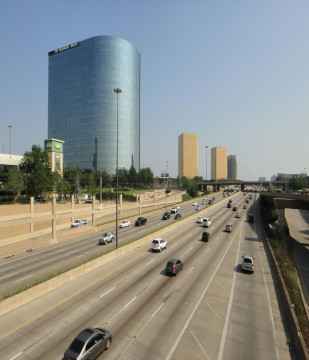
Dallas-Fort Worth sits at the center of this, as we covered in why Dallas became America's new data center capital. Oncor's territory, which covers much of the metroplex, holds the largest concentration of projected large-load growth in ERCOT's forecasts.
ERCOT responded by delaying Batch Zero, the process the PUC approved in June for studying large loads in groups instead of one at a time. Project classifications were due August 7 and the study was set to begin in September. On August 20, the PUC granted a good-cause exception to that August 7 deadline. ERCOT is now aiming to file its audit results by December 10, and it has said the Batch Zero study will not be finished by its old April 9, 2027 target. As of ERCOT's August 20 briefing, there was no replacement date. The audit is moving. ERCOT has published the community impact survey that more than 400 projects must complete.
What the order does not do
The order governs interconnection approvals. It is not a construction ban. ERCOT has said its own long-term demand forecast may be inflated, and experts say a large share of the queue is probably speculative or duplicative. The data center industry's main trade group said it hopes the audit separates committed projects from speculative ones.
That sorting is what borrowers should think about. If your project is real, the audit is a delay. If your project is padding the queue, it is a bigger problem.
It also does not carve out projects that are close to the finish line. ERCOT counts 17 large loads, mostly data centers, that cleared its stability assessment and are slated to come online later this year. None had approval to energize as of the August 20 briefing, and ERCOT said they will still go through some form of the audit.
What a six-month slip costs
Take a $15 million land loan at 10 percent, interest-only. These are round numbers for illustration, not a quote. Interest runs $1.5 million a year, or $125,000 a month. If energization slips six months, that is $750,000 of extra carry before the project earns a dollar. If the loan matures during the slip and you use a six-month extension at a 1 percent fee, add $150,000. The delay costs $900,000, and none of it goes into the project.
Interest is the visible cost. The quieter cost sits in your documents. Law firms advising financiers on the pause have pointed them to how the delay touches lender security interests and counterparty termination rights. If you have a tenant agreement with a delivery date, read what happens when you deliver late, and find out whether the customer gets a right to terminate.
What lenders will look at next
Lenders already scrutinize power access at every stage of underwriting. The audit gives that scrutiny a calendar, and it hands borrowers a preview of the questions. It asks each project where its power will come from, including whether it is building or buying its own generation and how far along that effort is. It asks how much water the site will use and where it comes from. It asks what state and local incentives the project receives, and who owns and controls it.
Assemble those answers now. We expect a lender to want most of them anyway, and building the package before a term sheet costs far less than building it after.
If your timeline just moved
Start the lender conversation before the maturity does. A borrower who asks for more time six months out is negotiating. A borrower who asks the week before is asking for a favor.
If the gap is in the capital stack, there are structures built for that. Preferred equity or mezzanine debt can cover what senior debt will not. A bridge loan can carry a site through the audit when the fundamentals hold. Which one fits depends on where your project sits in the power process, who your tenant is, and how much time you actually need.
If your power plan depends entirely on the grid, look at on-site generation. It costs more to build and it is harder to underwrite, but the audit asks about it directly, which tells you where regulators are looking. It does not remove the risk. A July PUC order in the first case under Senate Bill 6 found that emergency curtailment of a co-located data center is not capped at the size of its paired generator.
Our earlier guide to data center and powered land financing covers how lenders stage these deals and why confirmed power commands a premium. The audit does not change that logic. It changes how long you may wait to prove you have it.
Terrydale is a commercial mortgage broker, not a lender. Our advisory team works through timeline and structure questions like these before a deal goes to our lender network, whether it needs data center financing or construction financing. If your loan matures before ERCOT's December 10 target, talk to us now, not in November.
Partner With Terrydale Capital for Your Debt Financing Needs
When it comes to debt financing, understanding the right timing, process, and options is crucial. At Terrydale Capital, we provide a comprehensive range of commercial loan solutions tailored to meet your business's unique needs.





























































Success!
Product has been created successfully!
Headquartered in Dallas, Texas, Terrydale Capital is a leader in commercial real estate financing. We have close relationships with the nation’s top banks, lenders & family offices allowing us to provide the most competitive financing solutions in the market.


