Multifamily Loans in Kansas City: What Borrowers Need to Know

Terrydale Capital
Nov 4, 2026 15 Min read
A Kansas City apartment owner who bought at a 5.2% cap rate and plans to refinance is going to hit a simple fact: the loan a lender will write is smaller than the loan the owner is hoping for. The gap is not a Kansas City quirk. It is arithmetic, and it is worth running before anyone asks for a quote.
Where Kansas City stands
Kansas City is not a distressed market, and it is not a hot one. Northmarq's second quarter 2026 report puts metro apartment vacancy at 7.7%, up 80 basis points from a year earlier, with asking rents at $1,289 a month, up 1.4% over the same period. Net absorption was under 100 units in the first half of 2026, against more than 1,300 units in the first half of 2025, while the pipeline sits at roughly 6,300 units under construction.
Pricing has held up better than leasing. The median sale price in the first half was $149,800 per unit, about 3% above 2025 and roughly 20% below the 2022 peak. Cap rates on closed deals averaged 5.2%, up from 5.0% in both 2024 and 2025. Roughly 2,800 units traded for $483.5 million.
Yardi Matrix measures the market differently, so its numbers do not line up with Northmarq's. Its August 2026 report has asking rents at $1,383, up 2.4% year over year, which ranked fourth among the top 30 U.S. markets. It shows stabilized occupancy at 93.9% in June, down 90 basis points over 12 months, and construction starts down 67% year to date. Two sources, two methods, one story: rents are still growing and leasing is softer than it was. Lenders read both, and they will underwrite to the weaker number.
Who lends on Kansas City apartments
Five kinds of capital finance most Kansas City multifamily deals. Which one fits depends on the property, the business plan and how soon the borrower needs to close.
Agency lenders, meaning Fannie Mae and Freddie Mac, are usually the first call on stabilized apartments. The Federal Housing Finance Agency set 2026 multifamily purchase caps at $88 billion for each of the two, a combined $176 billion, which is more than 20% above 2025. Agency loans are generally non-recourse with standard carve-outs, and they tend to size at a debt service coverage ratio between 1.20x and 1.25x. For smaller buildings, Freddie Mac's small balance program covers loans from about $2 million to $10 million.
Banks and credit unions are the local option. They often size at 1.25x on a stressed rate, usually want recourse, and price off an index plus a spread. A regional bank that knows the Kansas City submarkets can move quickly on a smaller deal, and it can say yes to a building an agency would pass on.
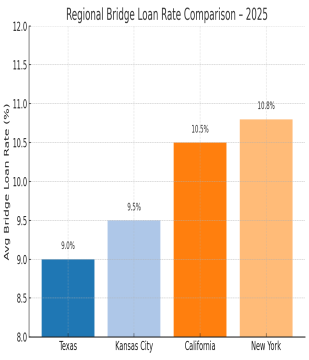
Bridge lenders and debt funds are for properties that are not stabilized yet: a value-add renovation, a lease-up after delivery, or a building where occupancy has slipped below what an agency will accept. The rate is higher and the term is short. The trade is speed and flexibility now for a refinance later, so the exit has to be real on day one.
Life companies and CMBS lenders fill in for larger, cleaner assets. Life companies typically look for a debt yield around 9% to 10%, debt funds around 8%, and agencies will go as low as 7% on strong multifamily. Those are broad ranges and every lender sets its own.
A broker's job is to put one deal in front of all of these and see who wants it. We shop each request across our lender network, because the lender that wins on a 300-unit Overland Park community is rarely the one that wins on a 40-unit building in Independence.
How the loan gets sized
Most borrowers think in loan-to-value. Lenders mostly think in coverage. The easiest way to see the difference is to run one building. Take 100 units at a $1,200 average rent, with 8% vacancy and credit loss (close to the market's 7.7%) and operating expenses at 45% of income. Both of those are assumptions for the example, not Kansas City averages.
| Line | Annual amount |
|---|---|
| Gross potential rent (100 units x $1,200 x 12) | $1,440,000 |
| Less 8% vacancy and credit loss | ($115,200) |
| Effective gross income | $1,324,800 |
| Less operating expenses at 45% | ($596,160) |
| Net operating income | $728,640 |
| Value at a 5.2% cap rate | about $14,012,000 |
That is roughly $140,000 per unit, which sits just under the $149,800 median Northmarq reported for the first half. Now the lender's question: how much debt service can that income carry at a 1.25x coverage ratio? Divide $728,640 by 1.25 and the answer is $582,912 a year.
Assume a 6.5% rate and a 30-year amortization. The annual payment constant is 7.585%, so $582,912 supports a loan of about $7.69 million. That is 55% of value, and the debt yield is 9.5%. An owner who walked in expecting 75% of value, or $10.51 million, is short by about $2.82 million. That is the gap between what the owner planned for and what the property's income will carry.
Interest-only payments narrow it. At the same rate, an interest-only structure supports about $8.97 million, or 64% of value, which still falls short of 75%. A lower rate helps as well: at 6.0% the amortizing loan rises to about $8.10 million. The rates here are illustrations, not quotes, and your numbers will move with the lender, the term and the day.
The lesson is to run the coverage math before you set a price, a renovation budget or a partner's expectations. When the loan comes up short, the options are more equity, an interest-only period, a lender with a lower coverage requirement, or a lower purchase price.
What lenders ask about a Kansas City property
The metro number matters less than the block your building sits on. Northmarq's data shows how far submarkets and property classes have drifted apart. Class A vacancy is 8.9%, while Class B and C combined sit at 5.7%. Platte County vacancy fell 150 basis points over the past year to 5.4% even as most of the metro moved the other way. North Kansas City asking rents rose 3.7% to $1,166, and Gladstone and Liberty rose 3.0% to $1,105.
New supply is the other thing underwriters will press on. Northmarq expects about 5,200 units to open in 2026, the second-highest total of the past decade, and forecasts metro vacancy near 8.0% by year end. This year's deliveries have clustered in Lee's Summit, with Downtown taking a bigger share in the second half. The pipeline is concentrated Downtown and in Shawnee, Lenexa and Overland Park. If a new community is leasing up within a mile or two of your building, expect a lender to ask about concessions, and to want your rent roll to show what tenants are actually paying.
Class matters for pricing as well. In the first half, Class C median pricing rose 29% to $129,300 per unit, while Class A pricing slipped 4%, even though Class A trade volume was up more than 40%. Roughly half the properties that sold were in Overland Park. Appraisers and lenders anchor to those comps, so the sales evidence for your submarket and class is worth pulling before the appraisal, not after.
A lender will want a trailing twelve months of income and expenses, a current rent roll, and an explanation for any gap between the two. Owners who show up with those already reconciled get quotes faster.
Where deals stall
The most common stall is a pro forma that the lender will not accept. Borrowers present the rent they plan to charge. Lenders size on the rent tenants are paying today, with their own vacancy and expense assumptions layered on top. When the two numbers sit far apart, the loan comes in smaller and the deal gets re-traded late.
The second is the wrong lender for the business plan. A building at 85% occupancy after a renovation may not clear agency standards yet, so sending it there burns weeks. A stabilized building financed with a short bridge loan costs more than it needs to, and it creates a refinance problem later.
The third is prepayment. Fixed-rate agency and CMBS loans carry yield maintenance or defeasance, which can make a sale or a refinance expensive if rates fall. Know the exit before you accept the term, and ask for the prepayment schedule in writing at quote stage.
The fourth is timing. Payoff statements expire, entity paperwork lapses, and appraisals take longer than anyone budgets for. Starting the refinance well before the maturity date costs nothing. Starting after it costs real money.
Getting a Kansas City deal placed
Terrydale Capital is a commercial mortgage broker, not a lender. We take a request, price it against agency, bank, bridge and life company options, and tell the borrower which structure fits and why. Our multifamily financing page covers the programs we work with, and our bridge financing page covers properties that are not yet ready for permanent debt.
If you want to test a deal before you call anyone, the CRE refinance calculator runs the coverage math from the example above on your own numbers. When you are ready to talk through a specific Kansas City property, contact our team or book an advisory consultation. Send the rent roll and the trailing twelve months and we will tell you what the property will carry.
Partner With Terrydale Capital for Your Debt Financing Needs
When it comes to debt financing, understanding the right timing, process, and options is crucial. At Terrydale Capital, we provide a comprehensive range of commercial loan solutions tailored to meet your business's unique needs.



























































Success!
Product has been created successfully!
Headquartered in Dallas, Texas, Terrydale Capital is a leader in commercial real estate financing. We have close relationships with the nation’s top banks, lenders & family offices allowing us to provide the most competitive financing solutions in the market.


